In this post:
- The U.S. economy is showing both strength and weakness at the same time.
- Stock market growth is being driven by a few large technology companies.
- This growth is creating a divide between those who benefit and those who do not.
- The effects are clearly visible in travel and hospitality.
- Luxury brands are thriving while midscale and value brands face pressure.
- What travel brands can do to adapt to this new reality.
We live in a moment of contradiction. The stock market keeps climbing to new heights. GDP is growing. News anchors tell us the economy is strong and resilient. Yet at the same time, people are struggling. Inflation is eroding purchasing power. Debt is piling up. Consumer confidence is falling.
For most people, this doesn’t add up. How can the economy be strong when their own lives feel more precarious?
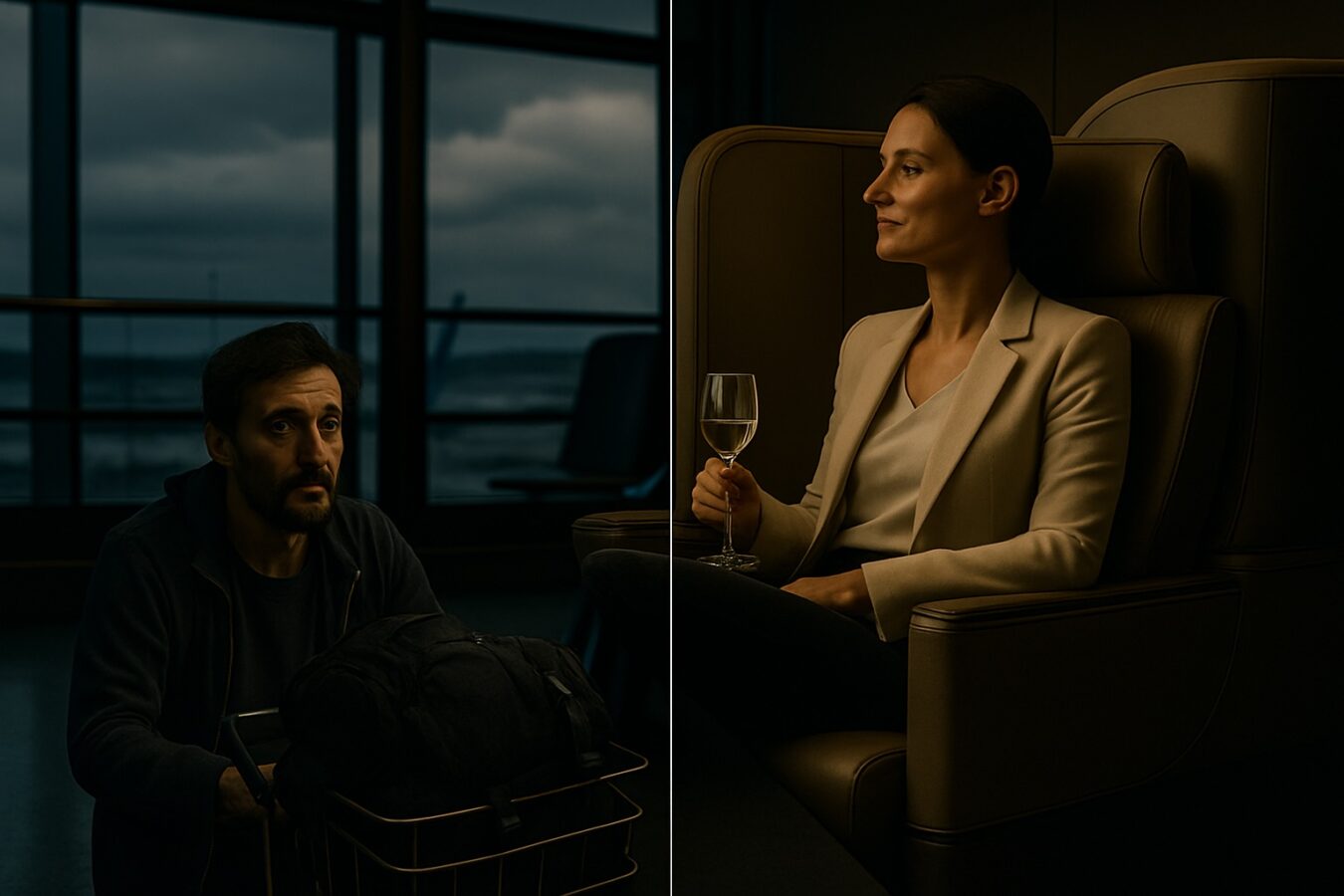
The answer is simpler than economists make it sound: the recovery is not being shared equally. Some people are getting richer. Others are falling behind. This pattern has a name. Economists call it the K-shaped economy, because when you chart it on a graph, it looks like the letter K. One line goes up. One line goes down. They diverge.
The Story Behind the Numbers
This story didn’t start yesterday. In the 1980s, something shifted in the American economy. Globalization moved manufacturing overseas. Labor unions weakened. Tax policy changed. The benefits of growth stopped flowing to workers and started flowing to those who owned capital instead. For forty years, wage growth stagnated even as productivity increased. Workers became more efficient. But their paychecks stayed the same.
Today, the top 10 percent of earners account for roughly half of all consumer spending. This is not because they spend more per person than the middle class. It is because they have so much more wealth. The top two income quintiles own about 80 percent of all stocks. When stock markets rise, they get richer. The rest of America gets very little.
Meanwhile, the bottom 60 percent of households face a different reality. Credit card delinquencies are at 11-year highs. Savings rates have collapsed. People are not building financial cushions. They are using what little they have just to keep up with inflation and rising costs.
Much of the stock market’s strength comes from a handful of technology companies, all excited about artificial intelligence. Microsoft. Amazon. Meta. Nvidia. These companies are enormously profitable. But they don’t employ that many people relative to their size. This means wealth concentrates at the top. It doesn’t trickle down. It doesn’t circulate through communities. It sits in investment portfolios and stock portfolios of people who are already very rich.
From where I sit running a business that depends on consumer confidence and spending, this feels fragile. Paper gains in tech stocks don’t translate into real purchasing power for most people. They don’t make people feel secure enough to take vacations or plan for the future. When growth becomes detached from everyday life, it becomes hard to plan anything.
What This Means for Travel
The K-shaped economy is not invisible in travel and hospitality. You can see it clearly in the data.
Through August 2025, luxury hotels achieved 5.3 percent RevPAR growth. Economy hotels declined 1.8 percent. In fact, luxury and upper-upscale hotels were the only segments growing at all. This tells a story. Luxury grew because wealthy guests kept spending. They felt confident. They were not worried. Budget hotels struggled because their guests were cutting back.
The luxury segment’s strength came from rate increases. Average daily rates were up 5 percent year over year. Luxury guests were not looking for discounts. They were willing to pay more for experiences they valued.
But something darker appeared in November. Consumer confidence fell to its lowest level since April. The Expectations Index, which measures whether people think conditions will improve, dropped below 80 for the tenth consecutive month. Historically, when this number stays low for this long, recession follows.
People cited prices, inflation, tariffs, and job market uncertainty as their main concerns. Most importantly, they said they would be spending less on travel and leisure.
This is a leading indicator. When consumer confidence falls, discretionary spending falls. Lower-income households are the first to cut back on vacations. And lower-income households are the largest part of the customer base for midscale and value hotels.
What Happens Next
The K-shaped economy won’t disappear tomorrow. It reflects deep structural forces: who owns assets, how wealth is distributed, how wages have stagnated relative to productivity. These things don’t change quickly.
Travel brands must accept this reality and adapt to it.
For luxury brands, the path is clear: focus on meaning and transformation. Your guests are not shopping for a room. They’re shopping for an experience that reflects their identity and values. They want wellness. They want personal growth. They want to feel that their trip meant something. Luxury guests are not price sensitive; they are meaning-sensitive. When you help them understand how your experience connects to who they want to become, they will spend.
For midscale brands, the challenge is different. Your guests still want to travel. They still want connection, rest, time with family. But their money is tight. They’re anxious about the future. Your job is to give them real value without cutting corners on authenticity. Find the experiences that matter most to them. Strip away the excess. Make it real for them.
For all brands, remember this: economic uncertainty creates emotional needs alongside financial constraints. When life feels unstable, people search for reassurance. They want comfort. They want authenticity. They want to know that the money they spend is going somewhere real, somewhere honest. This is true whether someone is staying at a luxury resort or a midscale hotel.
The deeper question is this: why do people travel in the first place? What are they actually seeking? The answer isn’t always what it appears to be. A person booking a luxury resort is not just seeking luxury. They’re seeking meaning. A person booking a midscale hotel is not just seeking an affordable room. They are seeking belonging and connection at a price that still feels honest.
At Wallop, we developed something called the Converge Travel Motivation Framework (CONVERGE | TMF). It helps travel brands understand these deeper patterns. Instead of just dividing customers by how much they spend, Converge helps you understand what they’re actually looking for. Why do certain experiences matter to them? What do they need from travel? How do their motivations shift when the economy feels uncertain?
Whether you serve luxury guests or midscale guests or value guests, understanding these motivations is how you stay relevant. This is how you build loyalty. This is how you grow in a fragmented economy.
The K-shaped economy is reshaping travel. Brands that understand this pattern, and brands that understand what their guests actually want, will thrive. The others will struggle.
If you want to explore how your brand can adapt to this new reality, reach out. We can show you how to understand your audiences at a deeper level and build strategies that work across all segments of a divided economy. Contact us
Sources
- Bloomberg: https://www.bloomberg.com/news/articles/2025-09-16/top-10-of-earners-drive-a-growing-share-of-us-consumer-spending
- The Street (methodology critique): https://www.thestreet.com/economy/are-the-top-10-of-american-consumers-really-driving-50-of-spending-economists-debate
- Fortune (Morgan Stanley data): https://fortune.com/2025/11/17/will-economy-crack-consumer-spending-recession-inequality-affordability-k-shaped/
- PwC/STR (Hotel data): https://www.pwc.com/us/en/industries/financial-services/asset-wealth-management/real-estate/emerging-trends-in-real-estate-pwc-uli/property-type-outlook/hospitality.html
- Conference Board (Consumer Confidence): https://www.conference-board.org/topics/consumer-confidence/
- CNBC (Chipotle/earnings): https://www.cnbc.com/2025/11/03/third-quarter-earnings-economy.html