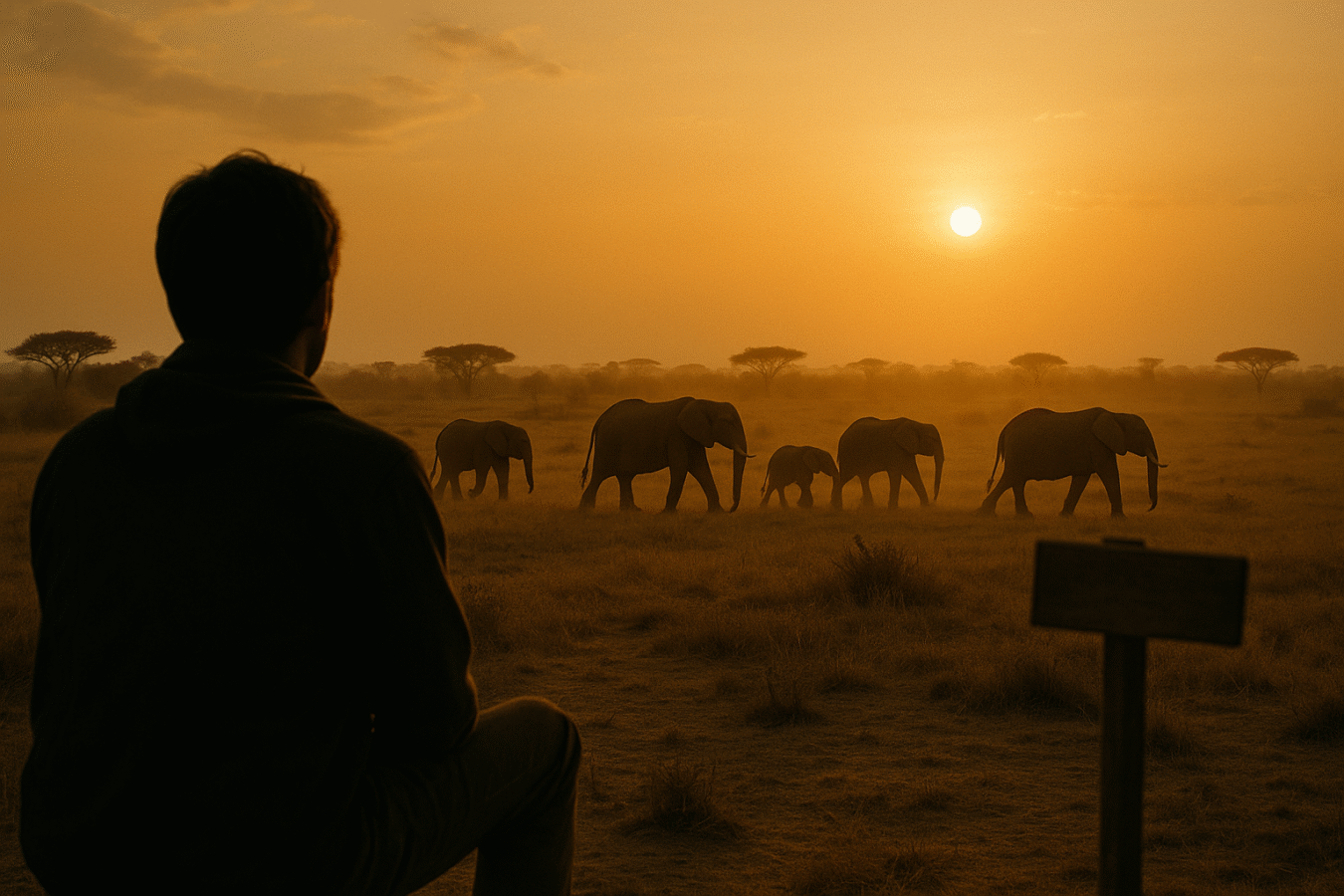
We often think our travel choices are driven by our dreams or aspirations that are developed over a lifetime of experiences. A surf trip to the Mentawais, chasing perfect waves on the edge of the earth. An African safari, watching elephants cross the savanna at sunrise. Riding camels through the dunes of Morocco, the air thick with the scent of mint tea.
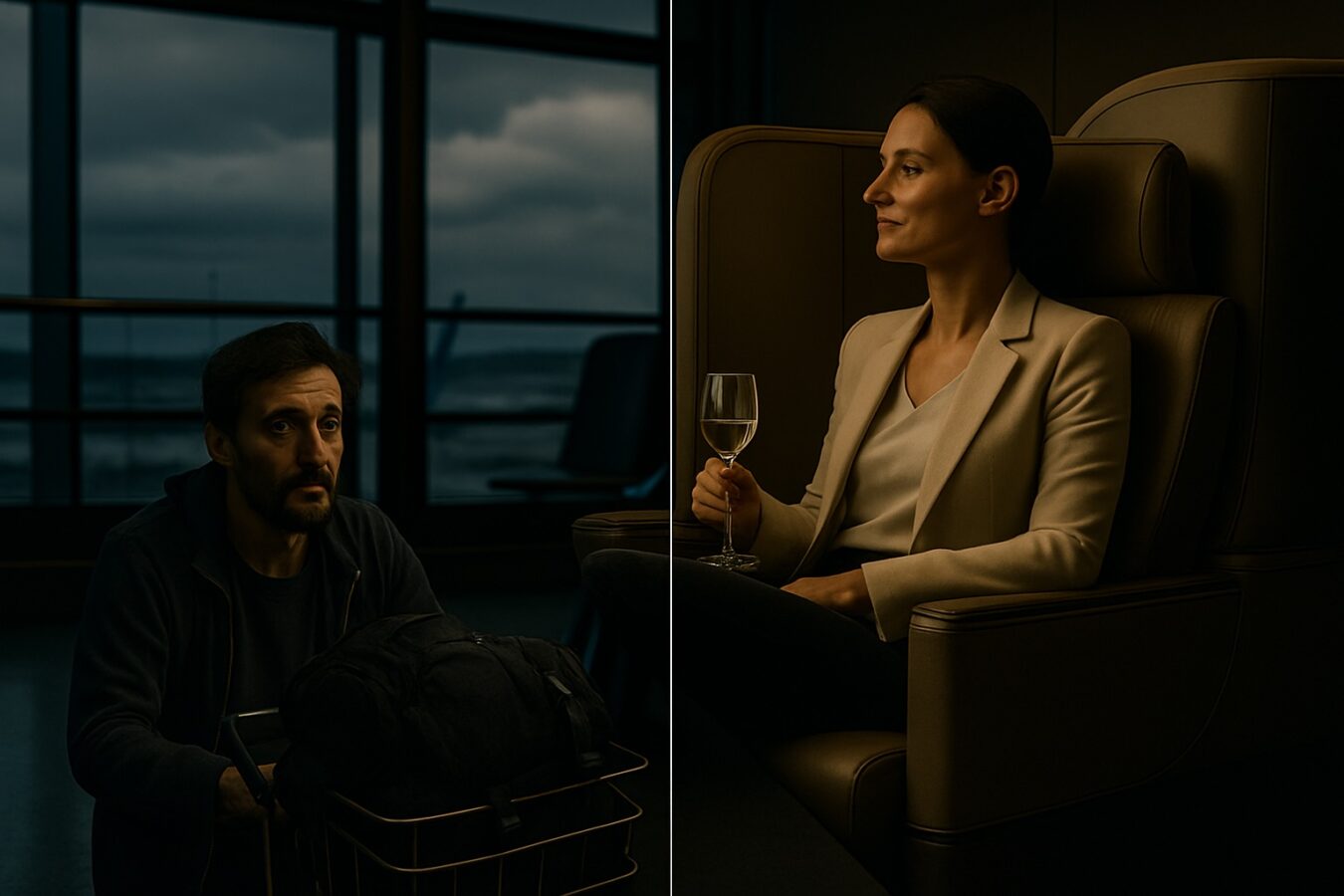
But often, our most decisive travel moments are sparked by something far less romantic: the fear of missing out.
Behavioral scientists call this loss aversion. First described by Daniel Kahneman and Amos Tversky in their work on Prospect Theory (1979), it’s the tendency to feel the pain of losing something about twice as strongly as the pleasure of gaining it. It’s why missing out on an experience we could have had feels worse than never knowing about it in the first place.
When Knowing Changes Everything
Imagine you’d never heard of the Mentawais. Life goes on.
But the moment you see a photo of a perfect turquoise barrel breaking over a coral reef, your brain adds a new entry to its bucket list.
From that moment, not going becomes a loss.
It doesn’t matter that you lived for 30 years without caring about it. Neuroscience research shows that the amygdala, the brain’s fear-processing center (commonly referred to as fight or flight), reacts more strongly to potential losses than to equivalent gains. Awareness triggers a shift in the brain’s wiring, heightening the emotional weight of the choice.
Intrinsic motivations under threat
In our travel motivation model, some desires (intrinsic) come from within us. For example curiosity, connection, growth, beauty. Loss aversion amplifies each in its own way:
- Curiosity: The fear of losing the chance to experience a place before it changes forever (visiting Tuvalu before it disappears beneath the waves).
- Connection: The dread of being absent from a shared experience that will be retold for years (missing a friend’s destination wedding in the Azores).
- Self-Actualization: Losing the rare chance to challenge ourselves or change our perspective (trekking Everest before getting too old).
- Beauty: Worry that a landscape, cityscape, or cultural moment will never look the same again (seeing Japan’s cherry blossoms in full bloom before the season ends).
Extrinsic motivations with a countdown clock
External motivators like status, belonging, health, aspiration are equally vulnerable to loss aversion.
- Status: Missing an invitation-only yacht luxury retreat can feel like losing the chance to project an image of success and sophistication.
- Belonging: Missing an annual trip with friends might not just feel like skipping one holiday, but being outside of group’s history.
- Health & Wellness: Delaying a restorative journey can feel like letting time run out on your own wellbeing.
- Aspiration: That dream safari or Arctic voyage might not be possible when life circumstances change, making the “someday” feel like “never.”
How Travel Brands Can Ethically Use Loss Aversion
Loss aversion is a powerful motivator, but also nuanced. If you push it too hard it feels manipulative. Use it carefully, and it can create a sense of urgency while still feeling authentic. The key is to anchor that urgency in real circumstances so the scarcity is both truthful and meaningful to the traveler. For examples:
- The brief moment each spring when cherry blossoms open
- A cultural festival that won’t be back for another decade
- A species migration that follows an ancient rhythm
- A glacier that’s retreating in plain sight
When these constraints align with genuine motivations, they amplify action without raising anxiety. This aligns with Cialdini’s (2009) Principle of Scarcity, which shows people place higher value on things they perceive as rare or time-sensitive.
The Loop Between Silent Influencers and Loss Aversion
In the Silent Influencers post, we explored how external forces shape travel choices. Loss aversion is definitely one of the most potent. A scarcity cue like “only two rooms left” is the obvious and most common version of it, but the subtler triggers can be more enduring:
- A friend’s story about snorkeling with manta rays in the Maldives, told over dinner, that leaves you feeling you’ve already missed your moment.
- A news headline about glaciers in Patagonia retreating faster than expected, turning a “someday” trip into an urgent one.
- A fleeting social post about a perfect wave peeling across a reef or a herd of wildebeest crossing a river that quietly sparks the feeling that time is running out.
- An overheard conversation in a coffee shop about a just-returned trip to Bhutan, planting the thought that the country’s unique culture might change before you see it yourself.
These external triggers awaken our internal motivations, and in doing so create new fears of loss. This is how the cycle feeds itself.
Final thought
Travel is as much about running toward something as it is about running away from what we might lose.
A moment.
A connection.
A part of the world as it is right now.
For travelers, this fear can be a quiet engine.
For travel brands, understanding it is not just a marketing tactic; it’s a way to speak to on to one of our deepest human impulses: hold on to the things that matter, before it’s too late.
References:
- Kahneman, D., & Tversky, A. (1979). Prospect Theory: An Analysis of Decision under Risk. Econometrica, 47(2), 263–291.
- Tom, S. M., Fox, C. R., Trepel, C., & Poldrack, R. A. (2007). The Neural Basis of Loss Aversion in Decision-Making Under Risk. Science, 315(5811), 515–518.
- Boothby, E. J., Clark, M. S., & Bargh, J. A. (2014). Shared Experiences Are Amplified. Psychological Science, 25(12), 2209–2216.
- Festinger, L. (1954). A Theory of Social Comparison Processes. Human Relations, 7(2), 117–140.
- Cialdini, R. B. (2009). Influence: Science and Practice. 5th ed. Pearson.